A lot of content still gets judged by clicks first. That view misses part of what is happening now.
AI search can surface a brand before the website visit, which means some content does a second job alongside traffic generation. It helps search systems understand the brand, trust the material, and pull it into answers with more confidence.
Here are four content assets that usually help most when that is the goal.
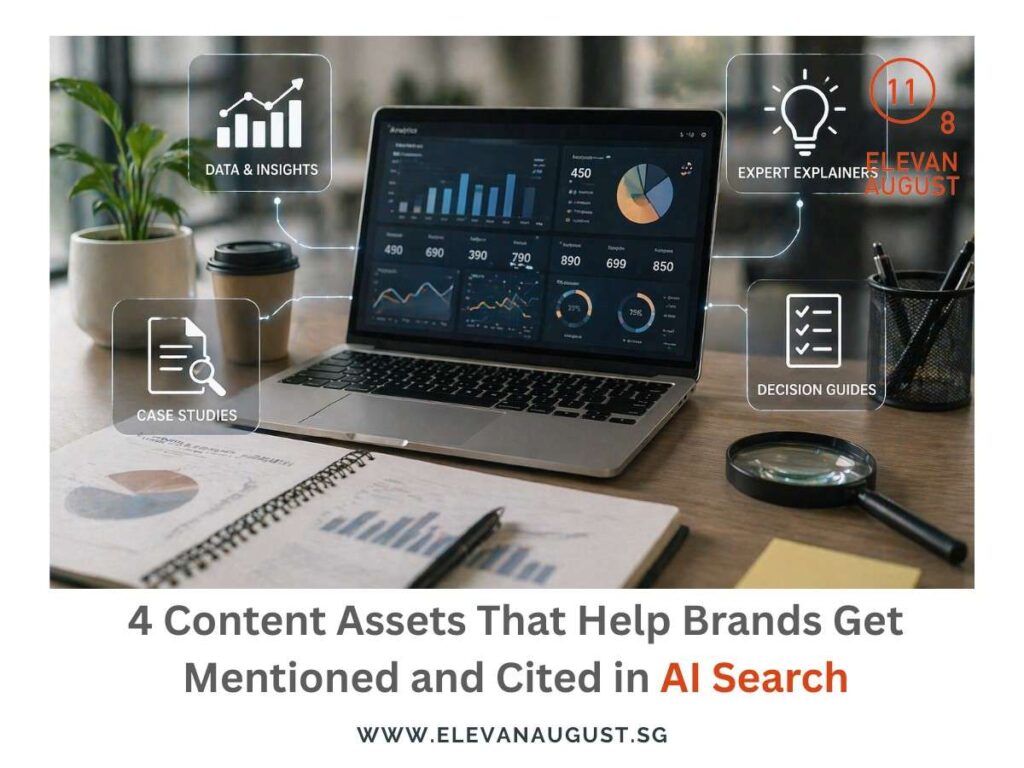
1. Original data gives AI search something specific to cite
Pages built around original data often stand out because they offer a fact, pattern, or comparison that other sources can point to directly. This could come from a small survey, internal findings, benchmark data, or a focused market snapshot.
The size of the asset if of less importance than the clarity of the takeaway. A page with one clear figure or one useful trend often carries more citation value than a long opinion piece.
AI search tends to work better with material that feels concrete, and original data gives it that kind of support.
2. Expert explainers give the brand a usable point of view
A strong explainer can earn mentions when it helps clarify a topic in a way that feels informed rather than recycled. This usually works best when the page reflects first-hand experience, practitioner judgment, or a more exact explanation of a common problem. A founder note, a subject-matter article, or a sharp industry explainer can all do this well.
The page becomes more useful once it gives search systems something clearer to extract than the usual surface-level summary. In that sense, the asset earns mentions because it improves understanding, not because it simply exists.
3. Decision-stage pages help AI search describe the brand with more confidence
Comparison pages, pricing pages, fit guides, and strong FAQs often matter more than they first appear to.
These pages answer the questions people ask when they are closer to a decision, which also makes them useful to AI systems trying to summarise options clearly.
A good comparison page can show where the brand fits. A pricing page can reduce ambiguity. A fit guide can explain who the offer suits best. When those answers are easy to find, the brand becomes easier to describe and easier to cite in a useful way.
4. Case studies make the brand easier to verify
A case study helps when it shows what the business actually did, for whom, and with what result. This kind of page gives AI search more than confident copy. It gives a real situation with a visible sequence.
A stronger case study usually explains the starting problem, the work carried out, and the outcome in terms that the reader can follow easily. That structure helps make the brand feel more grounded.
A business with clear case evidence often becomes easier to mention than one that only describes itself in polished general terms.
Final Thoughts
The content that gets mentioned in AI search usually gives the system something firmer to work with.
A useful data point, a grounded case study, a stronger explainer, or a clearer decision-stage page can all help your brand feel easier to trust and easier to reference. This is one reason content planning now needs to look beyond traffic alone.
Our work at Elevan August often supports that wider shift, helping businesses build content and website assets that strengthen search visibility, trust, and commercial intent at the same time, as a Best Digital Marketing Agency Singapore focused on measurable growth.
If you want help shaping those assets more deliberately, get in touch with us and let’s talk.