A lot of brands are still guessing when they talk about AI visibility.
One answer can make it feel like your brand is showing up well, and a few missed mentions can make the picture look worse than it is.
The real problem is simple. Most teams are not tracking the right signals yet.
Once you start looking at the prompts, the citations, and the pages getting pulled in, the visibility picture becomes much easier to read.
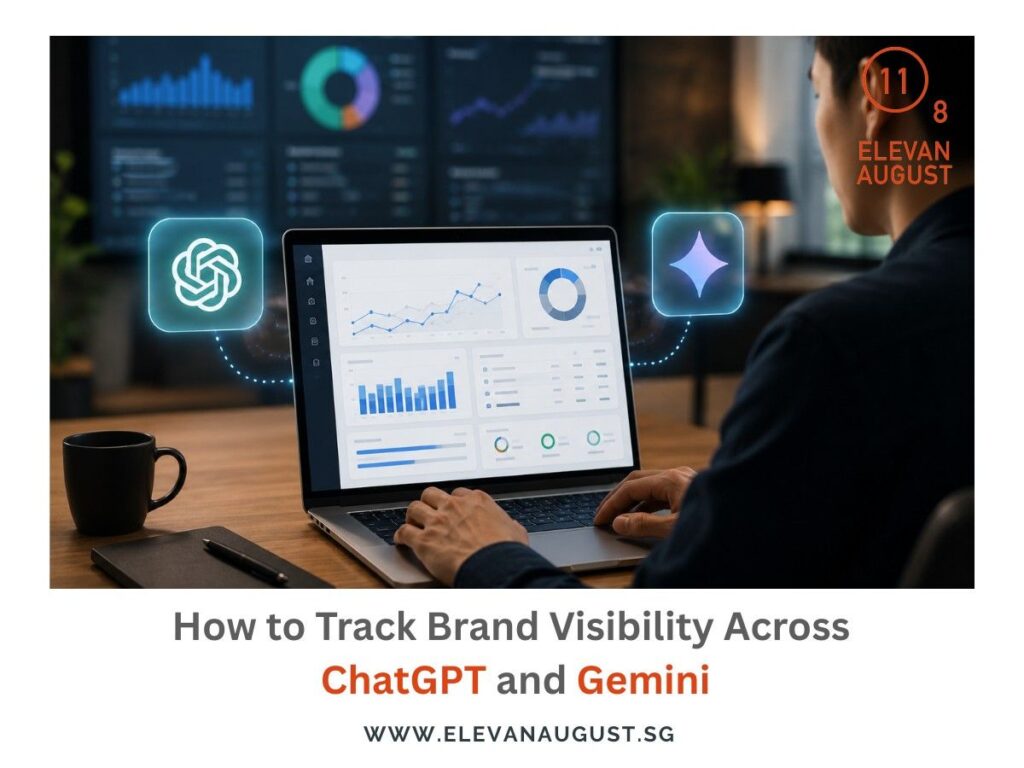
Here are three places to track if you want a clearer view of how your brand is actually showing up across ChatGPT and Gemini.
Track the prompts, mentions, and citations
You need a fixed prompt set before any visibility review starts becoming useful.
Pick the queries a buyer would realistically use, then keep checking the same ones over time. That usually means category prompts, comparison prompts, recommendation prompts, and problem-led prompts.
What you are looking for is not only whether your brand appears. You also need to note where it appears, how it is described, and whether the answer gives any supporting source or link.
ChatGPT search can include links to relevant web sources, so the supporting source matters as much as the mention itself.
This is where a tool like Semrush can help. Its AI Visibility Toolkit is built to monitor prompts, compare competitors, and track the sources shaping AI-generated answers. Used properly, that gives you a much steadier read on ChatGPT visibility than scattered manual checks ever will.
Track which pages and surfaces keep earning visibility
Gemini is harder to read if you only look at classic rankings.
Google now gives site owners dedicated Search Console views for generative AI features such as AI Overviews and AI Mode. That means you can track which pages are earning impressions inside those AI-driven experiences instead of guessing from old reporting alone.
The useful question here is not just whether a page appeared. You need to know whether the right page is getting surfaced for the right kind of query.
A comparison page may be useful for one search and commercially weak for another. A service page may gain visibility and still carry the wrong framing.
Once you track the page patterns properly, the visibility story becomes much less fuzzy.
Track what happens after the mention
A brand mention means very little if nothing useful follows it.
This is where GA4, branded search trends, and referral behaviour start earning their place. Watch for changes in branded search demand, direct traffic, referral visits from cited pages, assisted conversions, and the quality of the sessions arriving after those mentions.
The point is to see whether AI visibility is creating movement that your business can actually use.
This is also where the measurement starts becoming commercially relevant. Once you connect prompt tracking, source tracking, Search Console visibility, and downstream behaviour, AI search becomes something you can evaluate more clearly instead of something you discuss from memory.
Final Thoughts
AI visibility gets easier to improve once it becomes easier to measure.
A steadier system usually starts with the prompts that matter, the pages that keep surfacing, and the actions that follow those appearances.
This is also where our work often becomes useful, because tracking across ChatGPT, Gemini, search surfaces, source pages, and business outcomes usually needs content, SEO, and reporting to work together. As a leading digital marketing agency Singapore businesses trust, we help brands improve their visibility across both traditional search and AI-powered platforms.
If you want help building a clearer system for that, get in touch with us.