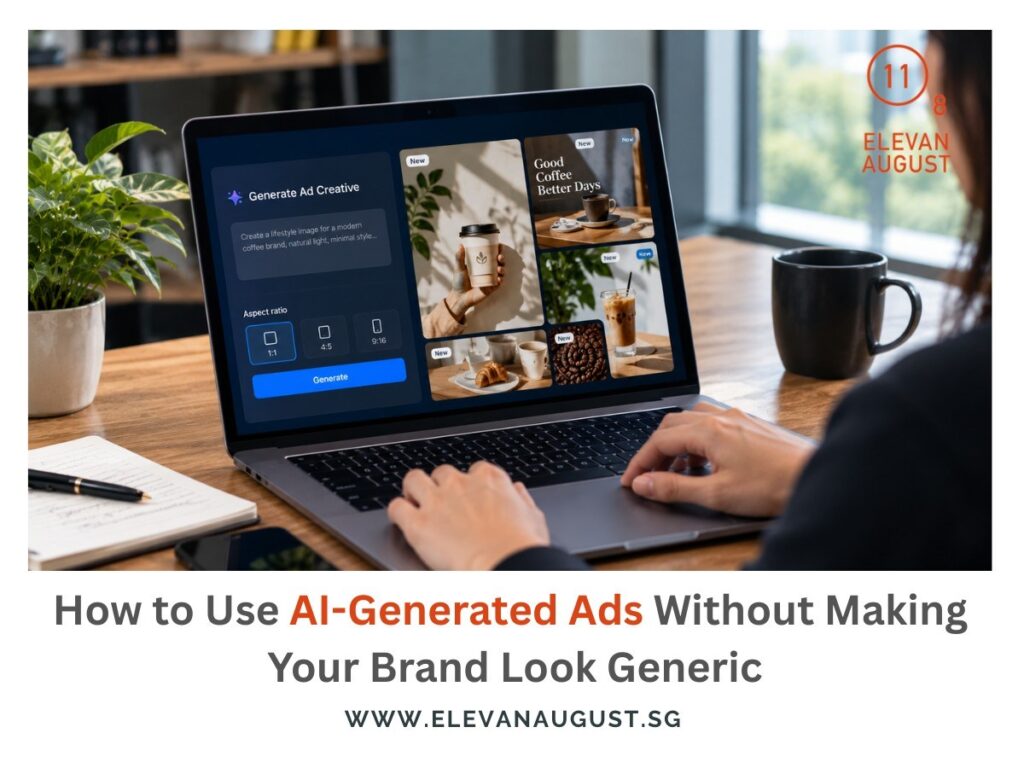
AI-generated ads can look polished and still give customers little reason to remember the business behind them.
An attractive image and a headline about quality could suit almost any company selling a similar product. A recognisable ad draws on details that belong to your business, from the promise you make to the way you present it.
Giving AI those details starts with deciding what you want customers to remember.
Choose what the ad should be remembered for
A specific promise gives your ad a message to build around and the customer a reason to pay attention. Before asking for headlines, you can identify who you’re trying to reach and what you can offer them.
Suppose you run a pet-grooming business where customers can book the same groomer each time. “Expert care for your pet” says little about that arrangement, whereas “Book the groomer your dog already knows” expresses a particular benefit.
You can then ask AI for headline alternatives that express this benefit while keeping the offer and booking conditions accurate.
Give AI references it can actually follow
Approved examples give AI more precise direction than descriptions such as “premium” or “friendly”, which leave room for different interpretations. If your tool accepts reference material, a small collection can include:
- Previous ads can demonstrate how you address customers and how much information you usually include in a headline or caption.
- Your logo, font, colours and layout examples can establish which design choices should stay consistent across new versions.
- Photographs of what you actually sell, plus a list of prices and inclusions, help ground the draft in your offer.
If you’re working with an agency on social media advertising in Singapore, this reference folder gives both sides something concrete to review before publication.
Test a new angle while keeping the brand familiar
Different versions can explore different reasons to buy while sharing the design choices that help customers recognise your business. You might lead with convenience in one ad and ongoing support in another, using the same approved photography and type.
If you’re comparing the effect of those messages, keeping the audience, offer and test conditions comparable helps you interpret the results. The test should also follow what happens after the click, using purchases for an online shop or suitable enquiries for a service business.
Check what the finished ad promises
Small changes in an image can change the offer people think they’re seeing, even when the picture looks convincing. A generated version of your product might acquire a different handle, finish or label, while rewritten copy could turn an optional extra into part of the package.
Keeping your original product photograph and generating the background separately gives you more control over those details. During layout, the lighting and scale need attention; a product photographed in a studio needs to look believable in its new surroundings.
Google’s brand controls vary by format, so even approved fonts and colours deserve a check in the preview. Each placement preview also gives you a chance to check that the headline, image and logo remain readable together.
Make the next campaign easier to recognise
The wording, images and design choices you approve for one campaign can guide the next, giving your ads a consistent voice and appearance. As you experiment with AI, those references help you check that each new version accurately presents your business and what you sell.
If you’d like help creating ads that reflect your brand, contact us to discuss your next campaign. We can work with you on the copy, visuals and campaign management, from the first brief through to reviewing the results.