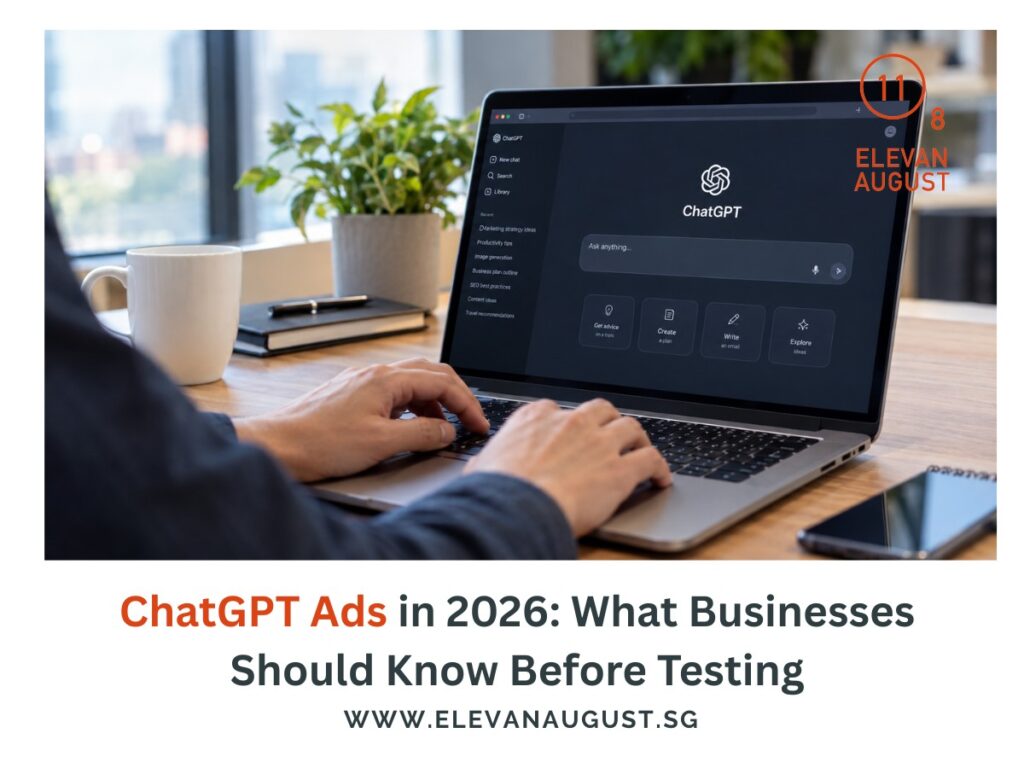
ChatGPT has a huge global user base, and OpenAI is now opening part of that attention to advertisers. Businesses in several countries can run ChatGPT Ads today, while Singapore is still waiting for self-service access.
As the rollout expands, local brands could gain a new way to reach people while they’re researching products, comparing options, and deciding what to buy.
Before you put money into the channel, it’s a good idea to understand how ChatGPT Ads works, what makes it different from Google or social ads, and what a sensible first test might look like.
Start with the basics of how ChatGPT Ads works
ChatGPT Ads currently appears for users on the Free and Go plans, while Plus, Pro, Business, Enterprise and Edu remain ad-free. Ads can appear below a ChatGPT response, with a clear sponsored label separating the placement from the answer itself.
For advertisers, this creates a familiar setup in a very different environment. Someone might spend several messages asking ChatGPT about a problem, narrowing down options, comparing products, or working out what to buy before an ad appears.
Singapore still sits outside OpenAI’s current list for self-service Ads Manager access. You can create an advertiser account in advance, although campaign access will begin once Singapore joins the supported markets.
ChatGPT Ads looks beyond a simple keyword
ChatGPT advertising can use the topic and intent of a conversation to work out which ads may be relevant. Advertisers can also provide “context hints” that explain what a product does, who it helps, and the situations where someone may find it useful.
Think of a business selling accounting software. A broad description such as “accounting software for companies” gives very little detail, while “accounting software for small businesses managing payroll and invoices” gives a clearer idea of when the product fits.
You’ll still need to think carefully about your customer, but the starting point changes. Instead of building everything around a list of search terms, you’re describing the problems, needs, and situations connected to your offer.
OpenAI also says context hints work as guidance rather than exact-match controls. The platform can interpret related ways people describe the same need.
Use the first campaign to answer one question
Your first ChatGPT Ads test should tell you whether one specific offer can attract the right kind of customer.
- Pick the offer with the clearest buying intent. A demo, consultation, free trial, or specific product gives you a cleaner test than a broad brand campaign.
- Keep the use case narrow. A payroll tool could focus on small Singapore teams looking for an easier way to run monthly payroll, instead of speaking to every business owner.
- Send the click to the page built for that offer. If the ad promotes a demo, take people straight to the demo page. If it promotes a product, use the relevant product page.
- Track the result that affects the business. For B2B, that might be qualified leads or booked demos. For ecommerce, completed purchases will tell you more. CTR and clicks can stay as supporting numbers.
Judge ChatGPT Ads on what happens after the click
The dashboard will show the usual ad numbers, including impressions, clicks, spend, CPC, CPM and conversions. Those figures are useful for spotting what gets attention, but they only cover the first part of the visit.
Say ChatGPT Ads sends fewer clicks than Google Ads, but a larger share of those visitors book a demo or submit a serious enquiry. In that case, the higher cost per click may still produce better business results.
The same logic works in reverse. A campaign can generate plenty of inexpensive traffic while very few visitors buy, enquire, or sign up.
Once ChatGPT Ads becomes available more widely in Singapore, compare what you spend with the quality and number of results you get. Cost per lead, conversion rate, sales, and lead quality will give you a better basis for deciding how much budget the channel should receive.
Final Thoughts
ChatGPT Ads gives businesses access to people at an interesting point in their research, often while they’re actively explaining what they need and comparing possible solutions.
Singapore businesses still have some time before self-service access arrives, which makes understanding the channel now useful without creating pressure to spend immediately.
When we assess paid-media opportunities with clients at Elevan August, we look at what each channel can add to the existing mix and how clearly its results can be measured. ChatGPT Ads should face the same test.
Once access opens here, starting with one clear offer, proper tracking, and a controlled budget can give you enough information to decide where the channel fits.