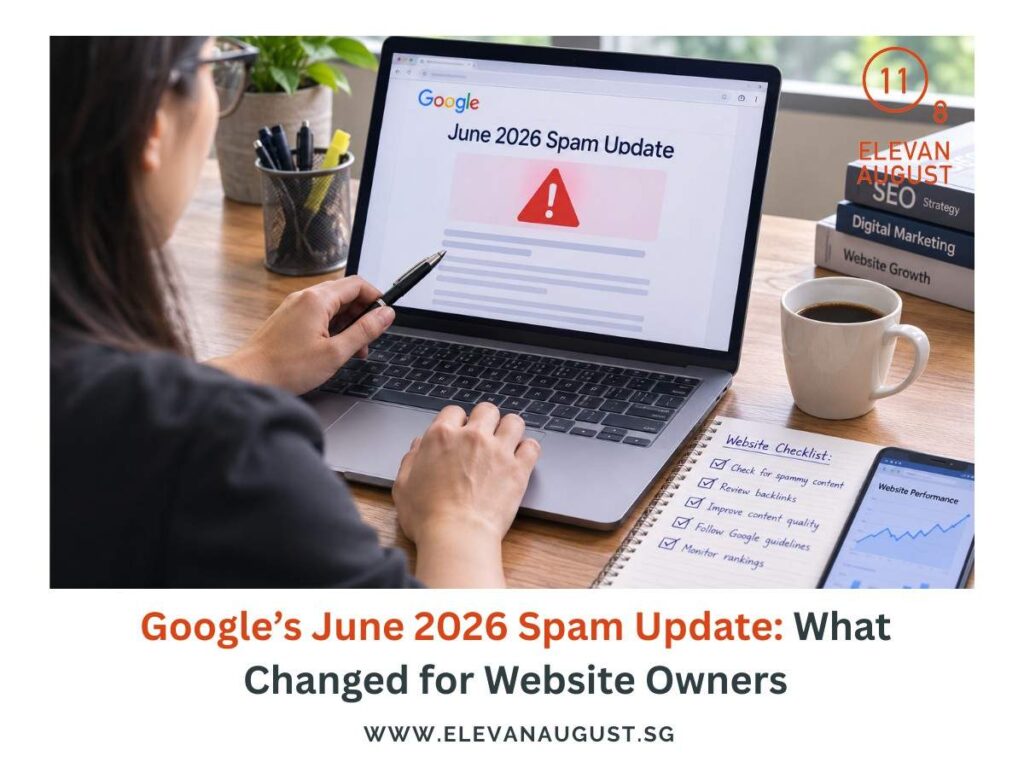
Google gave website owners very little to work with when it released the Google June 2026 spam update. The rollout ran from 24 to 26 June and applied worldwide across every language. Its purpose was to improve Google’s automated systems for spotting search spam, while the announcement covered timing and scope alone.
If your traffic shifted during the rollout, the limited detail makes diagnosis harder. Here is what the update means and how you can review your site.
What the update actually changed
Google used the June update to improve how its spam systems recognise sites that try to game search results. It was different from a core update, which looks more broadly at relevance and overall page quality.
A site could lose visibility if Google found patterns such as manipulative publishing, deceptive behaviour, or other policy breaches. Google kept the specific spam systems involved private, which leaves any list of targeted tactics unconfirmed. The clearest takeaway is that Google enforced its existing rules more widely across every country and language.
Which parts of your site deserve a review
The most useful review starts with patterns that appear across many pages. Focus on identifying recurring issues rather than isolated cases. Key areas to examine include:
- Near-identical articles or duplicate content across multiple pages
- Scraped or lightly rewritten copy that adds little original value
- Doorway pages created solely to rank for specific keywords
- Manipulative or unnatural link patterns
- Third-party content published mainly to leverage your domain’s authority
AI-generated content itself is not a problem, but large-scale production without meaningful originality can fall under scaled content abuse. Google’s spam policies also extend to attempts to manipulate generative AI responses in Search.
In addition, review technical elements of your site, especially:
- Advertising scripts or plugins that interfere with normal browser behaviour
- Any implementation that disrupts the back button or user navigation
Google began enforcing its back-button hijacking policy on 15 June, so these technical factors now carry greater risk if left unchecked.
How to check whether the update affected you
Search Console can show whether the timing and pattern match the rollout. Compare clicks and impressions before 24 June with the period after 26 June, then review the Pages and Queries reports for concentrated losses.
Group affected URLs by template, topic, author, or publishing method because shared production habits often reveal the cause faster than page-level edits. Check the Manual Actions report as well, while remembering that automated demotions can occur even when the report stays clear. Record each correction and expect recovery to take several months as Google reassesses the site.
Final Thoughts
The June update sharpened enforcement around a familiar rule: your content and site behaviour should serve visitors before they serve ranking goals. A measured response begins with understanding the update, finding the affected pattern, and correcting the process that produced it.
Businesses searching for SEO agency Singapore based after a sudden decline usually need this wider diagnosis before any edits begin. Our SEO work at Elevan August can support that review and help prioritise changes based on the evidence your site provides.