A page can look polished to a visitor and still be difficult for AI tools to read. The confusion often comes from ordinary website decisions, such as vague headings, important copy placed inside graphics, overlapping pages, or code that delays key information.
Generative engine optimization focuses on fixing those problems at page level. It helps the content, layout, links, and technical setup describe the same subject in a consistent way.
Here are seven GEO checks to review before launch and after the page goes live.
1. Give every page one clear job
A page becomes easier to interpret when its URL, title tag, H1, opening copy, and internal links describe the same subject.
The visitor should understand what the page covers within the opening screen, while the surrounding signals should confirm that purpose.
Start by defining the task the page supports, such as comparing services, understanding a process, or requesting a quote. Then check whether each major section helps the visitor complete that task.
Several URLs covering nearly identical needs can weaken the site hierarchy. Consolidating close duplicates or separating their purpose gives search systems a clearer page to select.
2. Let the layout explain the information
A useful visual hierarchy shows which idea comes first and how the remaining sections support it. Decorative elements can strengthen the design, while the structure still needs to carry meaning.
Use this checklist during design review:
- Each heading should describe the information that follows.
- Important explanations should appear as selectable text.
- Tables should include clear labels and readable values.
- Navigation labels should describe the pages they open.
- Mobile layouts should preserve the essential desktop content.
Google uses the mobile version of a page for indexing and ranking, so content removed from smaller layouts can change what its systems receive. Review mobile and desktop for information parity as well as appearance.
3. Include enough detail to describe the offer accurately
Broad phrases such as “tailored solutions” give search systems little usable context on their own. A strong page explains what the offer includes, who it serves, and which factors shape cost, delivery, or suitability.
Keep those facts near the sections they support. Pricing information belongs beside pricing, while service boundaries should appear before a visitor reaches the enquiry form.
Authorship and review dates help readers assess specialised or time-sensitive guidance. Name the responsible person or team and add supporting sources where needed.
4. Keep important content in the rendered HTML
Search systems need access to the words and links that carry the page’s meaning. Service descriptions, prices, comparison points, and policy details should appear in the rendered HTML that crawlers receive.
Tabs and accordions can support a tidy page when their content loads with the document. Essential copy that appears only after a click or through complex scripts deserves closer testing.
Google can process JavaScript, although semantic HTML and careful rendering checks remain useful for JavaScript-powered pages.
5. Clear technical access issues before launch
A page can carry excellent information and still struggle when access settings send conflicting instructions.
Google uses publicly accessible, crawlable content for its generative Search features, while ChatGPT Search relies on OAI-SearchBot access when publishers want their pages considered for summaries and citations.
Check these items before publishing:
- Important URLs should return a working 200 status code.
- Robots.txt should allow the crawlers you want to reach the page.
- Indexing directives should match the page’s intended visibility.
- Canonical tags should identify the preferred URL.
- Internal links should connect the page from relevant site areas.
- XML sitemaps should include important canonical pages.
These checks help search systems reach the intended page and understand which version deserves attention.
6. Use structured data to confirm visible facts
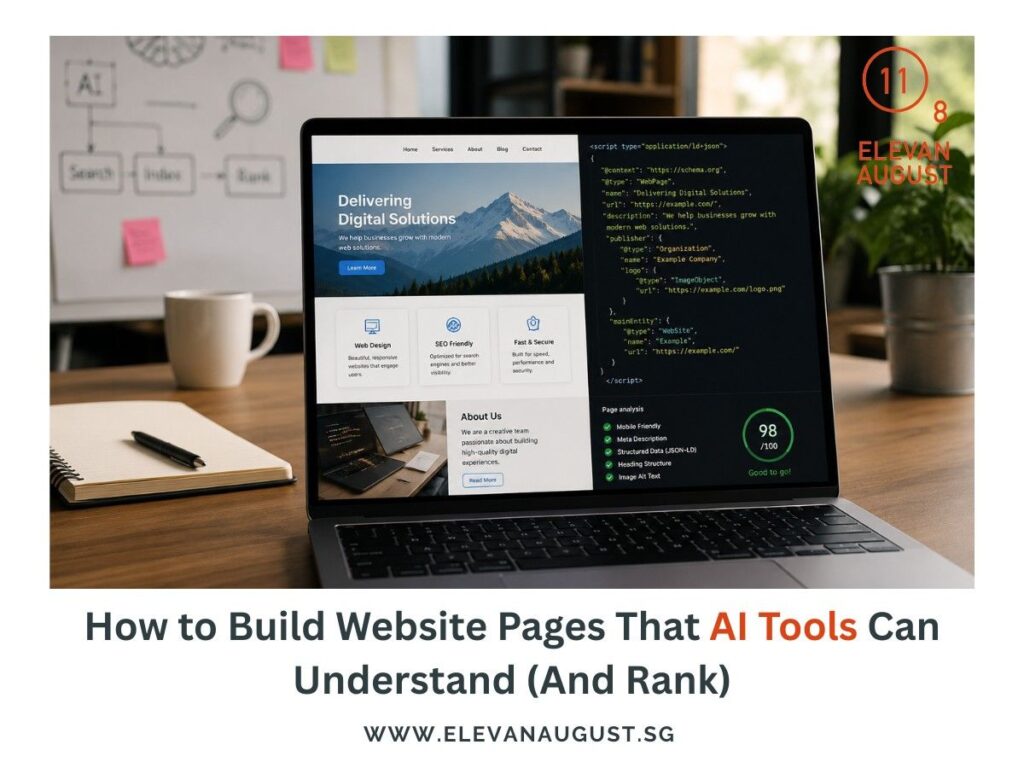
Structured data gives search systems machine-readable details about a page and the entities it describes. Suitable types may cover an organisation, local business, product, article, person, or event.
The markup should match information visitors can see. Accurate schema can clarify page details and support eligible rich results, while Google requires no special AI-specific markup for its generative Search features.
Use Google’s Rich Results Test for supported search features and the Schema Markup Validator for broader Schema.org syntax.
Testing can catch missing properties, syntax errors, and conflicting information before the page begins attracting traffic.
7. Review the finished page after launch
A final visual check shows what a visitor sees, while a search-focused review compares that page with the version crawlers received. It also confirms which URL Google selected for indexing.
Use Search Console’s URL Inspection tool to review indexing status, the canonical URL, and the rendered page.
Check the mobile layout, internal links, structured data, and lazy-loaded sections at the same time.
Analytics can then show whether the page attracts useful visits and enquiries. ChatGPT adds a source parameter to referral links, allowing publishers to identify visits from its search results.
Review the page again after major design, copy, or development changes. A component update can alter headings, remove internal links, or change the rendered content even when the page still looks similar to visitors.
Final Thoughts
Pages become easier for AI tools to understand when every layer supports the same meaning. Purpose, content, design, HTML, technical access, and structured data should reinforce one another from the first wireframe through launch.
A web design agency in Singapore can support this work when website planning includes search requirements from the beginning. Our website design and SEO work at Elevan August brings those decisions together, helping each page explain the offer clearly and guide visitors towards an enquiry.
Get in touch with us if your website needs a stronger foundation for traditional and AI-assisted discovery.