Search results now answer many questions before a visitor reaches your website. A page can hold a strong ranking and still get overlooked when another source supplies a clearer passage.
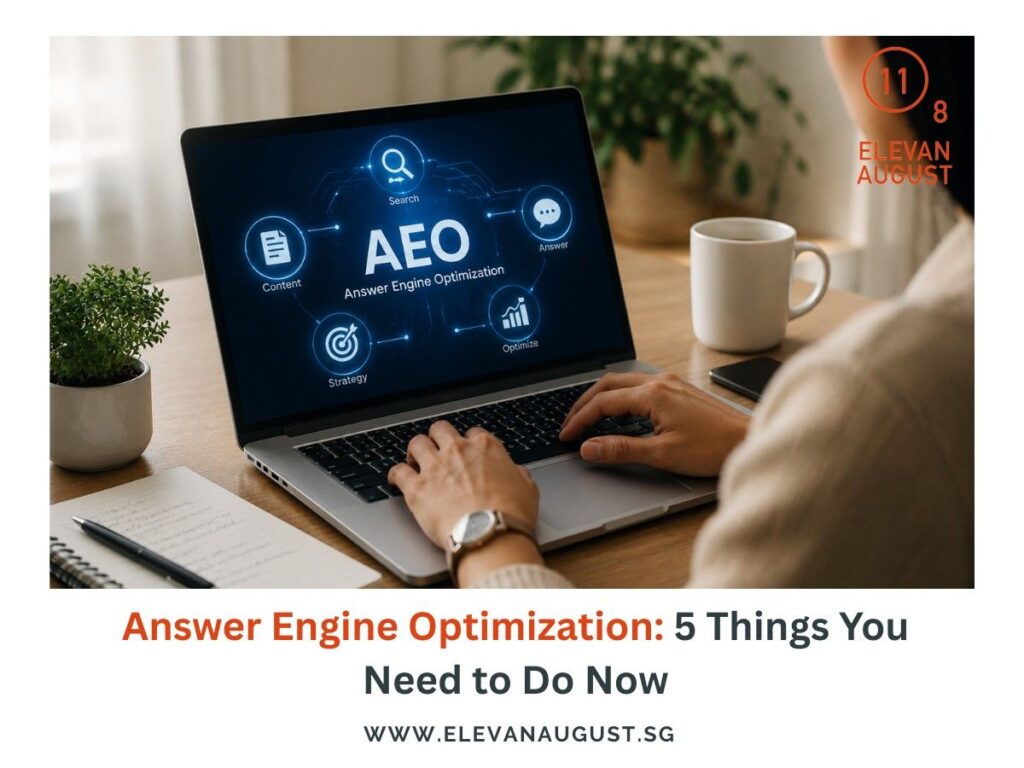
Answer engine optimization helps your content become easier for platforms (like ChatGPT, Claude, Perplexity, and Google AI Mode) to understand, quote, and cite.
The work begins with the page itself and builds on familiar SEO practices.
Here are five actions to give you a practical starting point.
1. Build a question list from real customer language
Start with questions already appearing in Search Console, internal site search, support tickets, sales calls, and customer emails.
Search Console shows the phrases bringing people to existing pages, while Semrush’s Keyword Magic Tool can uncover related question-based searches.
Group close variations under one useful page. Give priority to questions about cost, comparison, suitability, process, or risk because these topics often sit closer to a decision.
The final list should tell you which existing pages need stronger answers and where a new page may serve the reader better.
2. Give every important question a complete answer
A useful answer block resolves the main question first and adds detail in a sensible order.
Place it directly below the relevant heading so readers can find it quickly and answer engines can identify a self-contained passage.
Use this check when editing the section:
- Open with a direct response of roughly 40 to 60 words.
- Explain any conditions or exceptions in the next paragraph.
- Support factual claims with a source, date, calculation, or stated method.
- Link to the next page or action that helps the reader continue.
The surrounding copy can then cover context and closely related questions.
3. Add information worth citing
Answer engines have more reason to cite a page when it adds information that few other sources carry.
First-party data, expert review, a documented process, original images, and clearly explained calculations give them stronger material to reference.
Show who produced the information and when it was reviewed. For research or testing, explain how the result was reached.
A visible author, a relevant biography, and links to supporting sources also help readers judge the reliability of the page for themselves.
4. Check whether answer engines can reach the page
A well-written answer can surface only when crawlers can reach and process the page.
Google requires a page to be indexed and eligible for a search snippet before it can appear in AI Overviews or AI Mode. ChatGPT Search uses OAI-SearchBot to discover pages for its search results.
Review robots.txt rules, canonical tags, status codes, internal links, and JavaScript rendering.
Structured data can clarify important page details when it matches the visible content.
Google relies on its normal Search systems for generative features, so familiar technical SEO checks remain the right foundation.
5. Measure citations and business impact together
Page-level tracking shows whether your changes produce useful results.
Semrush’s AI Visibility Toolkit can monitor prompt-level appearances and competing sources, while Bing Webmaster Tools’ AI Performance report shows cited pages and grounding queries across supported Microsoft AI experiences.
Add Google’s generative AI reporting and GA4 referral data to the same review. Record the target question, updated URL, publication date, citations, visits, and conversions in one sheet.
A monthly comparison will reveal which changes improved visibility and which sections need another look.
Final Thoughts
The most useful AEO work happens one page at a time, starting with a real customer question and ending with a measurable business action.
Clear answers may earn attention, while sound technical access and stronger evidence help those answers travel further.
For answer engine work, an SEO agency in Singapore should connect content, technical SEO, website experience, and lead tracking into a cohesive strategy.
The team at Elevan August can help you bring these areas together, ensuring pages that earn attention guide visitors towards meaningful enquiries. Speak with us if your website needs a practical answer engine review and strategy.