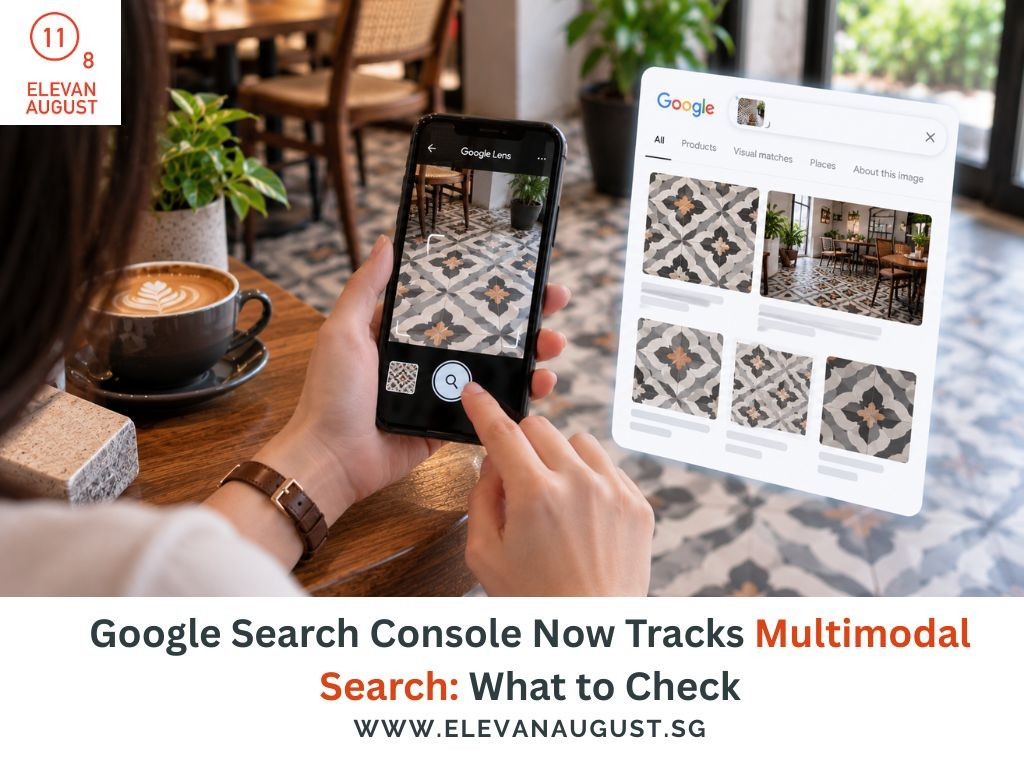
Imagine this: a customer photographs the patterned tiles in a café and searches for similar ones using Google Lens. A Singapore tile supplier may appear in the results, even though the customer began with a picture instead of typed words.
Since 24 September 2026, Search Console has begun showing how websites perform in these image-initiated searches.
Now, while this is big news and the numbers are useful, interpreting them requires a slightly different approach from reviewing ordinary keyword rankings.
See What Google Has Added to Your Search Reports
The new multimodal search filter in Google Search Console covers Google Lens, Circle to Search on Android, uploaded images, and Chrome’s right-click image search.
You’ll find it under “Performance” > “Search results” in the “Search type” filter, where clicks, impressions, click-through rate (CTR) and average position are available.
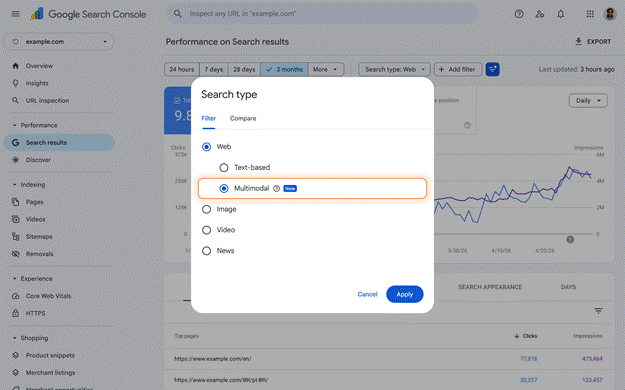
Note that the separate “Image” option covers results from the Google Images tab, so choosing the correct filter gives you a more accurate view of how people found your website.
There’s another detail worth checking before comparing recent traffic with earlier months. Google’s John Mueller confirmed that these searches were previously excluded from Search Console’s totals. This means you might’ve seen an apparent improvement around late September, which could partly reflect newly available data. Comparing complete periods after the roll out provides a more consistent starting point for understanding subsequent changes.
The Pages Tab Holds More Clues Than You Might Expect
The report shows which URLs appeared in image-based searches, even though the original photographs remain hidden.
Under “Pages,” you can see which parts of your website attracted impressions and clicks, while Countries and Devices help narrow down where those searches originated. Google also makes the Queries dimension unavailable for multimodal traffic, since people can initiate these searches using photographs instead of typed words.
A typed search such as “SEO agency Singapore” tells you something about the person’s intent. A tile supplier whose catalogue page appears after someone photographs a restaurant floor receives less context, although the page-level figures still offer something useful.
For instance, if a particular tile design consistently attracts attention from Singapore searches, the supplier has a reasonable starting point for reviewing the information available on that product page.
What Next Once You’ve Found Those Pages?
Let’s say the tile supplier finds that its patterned-flooring page appears regularly in visual searches, but gets very few clicks. The photographs might seem like the obvious problem, except Search Console leaves out a fairly important detail: what the customer was searching for. Someone photographing a café floor might simply want to know the name of the pattern, while a potential buyer could be searching for the same tiles.
Opening the product page is a sensible place to start. Are the sizes, finishes, slip ratings and delivery options easy to find, or would someone have to dig through the website to get those answers? Clearer product information could help visitors who are already interested in buying.
There’s also the way your website handles photographs. Google can index images added through standard HTML <img> elements, whereas pictures displayed solely as CSS backgrounds are excluded from image indexing. The alt text should describe what’s actually in the photograph, and the surrounding description should give readers enough information about the product.
Once the changes are live, give them a few weeks and check the same page in Search Console again. You can compare clicks and impressions across similar periods to see how its performance has changed, keeping in mind that search demand and other factors can affect the figures too.
Final Thoughts
Search Console also offers a multimodal filter within its Generative AI performance report, which records impressions from AI Overviews and AI Mode. The standard Search results report provides click data as well, making it possible to study website visits separately from appearances within Google’s AI features.
For Singapore businesses, the new reporting is worth observing over several weeks before drawing larger conclusions. A furniture retailer might find considerable visual-search interest in particular products, while a professional services website could continue receiving most of its traffic through typed searches.
We take a similar approach when reviewing organic performance through our SEO services, looking at the pages behind the figures and considering what visitors are likely to need. If your Search Console data has started showing unfamiliar patterns, our team can help you examine those findings alongside your existing search performance.