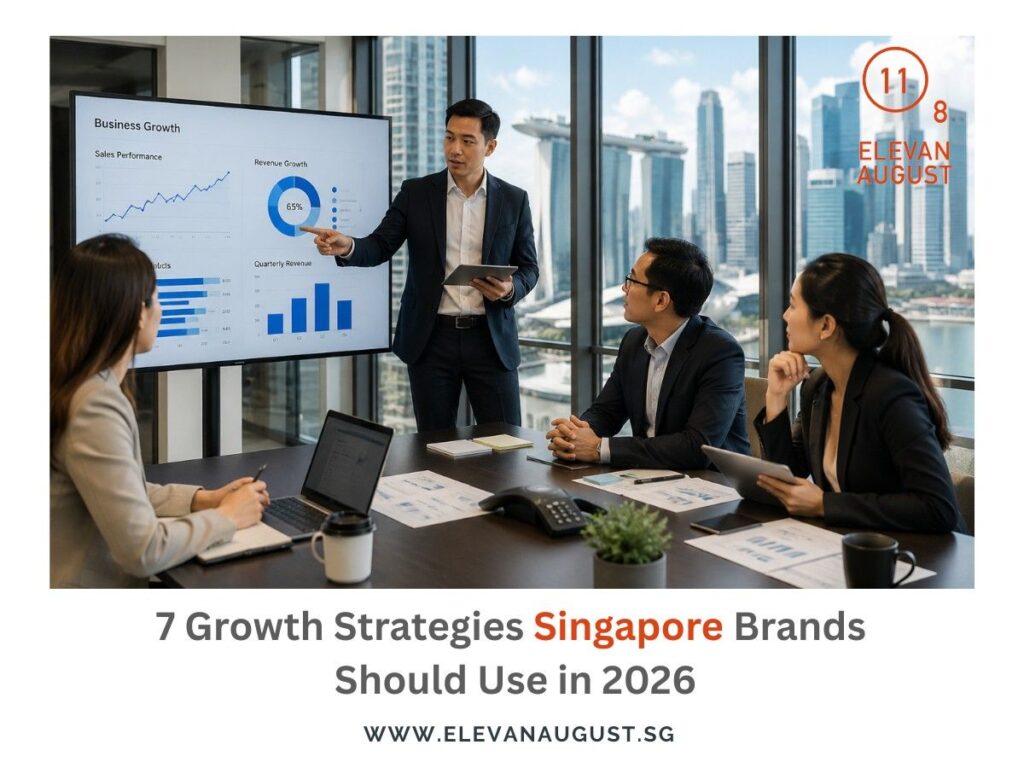
Growth feels harder now because attention is split across more places, trust takes longer to build, and AI has made average marketing much easier to produce. More output alone will not solve that problem.
Brands that keep growing in 2026 usually have a clearer point of view, a better way to capture demand, and a stronger grip on what turns attention into revenue.
Here are seven strategies worth prioritising if you want growth that holds up.
1. Sharpen your brand point of view
A clearer point of view helps your brand stay recognisable when more of the market starts sounding the same.
If your message could belong to almost anyone in your category, your growth starts getting expensive because every channel has to work harder just to create distinction. A stronger point of view gives your content, campaigns, and offers a clearer centre.
2. Treat AI search as part of SEO
AI search has widened the meaning of visibility.
Google’s current guidance says generative AI optimisation is still SEO at its core, which means your brand needs pages that are useful, clear, and easy for search systems to understand across both classic results and AI-powered experiences.
Brands that separate SEO from AI search too aggressively often end up solving the wrong problem.
3. Turn more attention into owned demand
A stronger growth system gives you more than rented reach. Email lists, remarketing audiences, CRM growth, WhatsApp pipelines, and other first-party channels help you keep access to the demand you worked to attract.
This matters more when platforms shift quickly and traffic patterns become less predictable. Owned demand usually makes later growth cheaper and more resilient.
4. Build content that supports trust and conversion
Awareness content still has value, though growth often speeds up when more of your content helps people compare, validate, and decide.
Case studies, fit pages, pricing context, strong FAQs, and useful proof-led content tend to carry more commercial weight than broad traffic pieces on their own.
Google’s people-first guidance and AI-search advice keep pointing back to useful, original, non-commodity content.
5. Diversify discovery beyond one channel
Google still matters, though discovery now happens through more surfaces. Social search, creator ecosystems, communities, AI search tools, and brand-driven demand all shape how people find and shortlist businesses.
A brand that depends too heavily on one discovery source usually becomes easier to destabilise. Growth gets healthier when discovery spreads across more than one route.
6. Use AI to improve speed without flattening the work
AI can help you move faster across research, production, analysis, and workflow. The problem starts once speed begins replacing judgment. When every draft sounds familiar and every idea feels pre-shaped, the work loses its edge.
The stronger use of AI usually sits in support. It helps your team move quicker, while the thinking, taste, and decisions still come from people who understand the brand.
7. Measure growth through outcomes, not channel vanity
A lot of activity can hide weak growth. Better measurement usually looks harder at qualified leads, conversion quality, revenue contribution, customer acquisition efficiency, or retention movement rather than channel-level excitement alone.
This is often where a strong strategy starts separating itself from a busy one, because the business can finally see which work is creating value and which work is only creating motion.
Final Thoughts
Growth in 2026 comes from alignment more than volume.
A clearer brand, better SEO for AI-shaped search, stronger owned demand, more useful content, broader discovery, smarter AI use, and sharper measurement all support the same idea: your system has to work together.
This is also what a digital marketing agency Singapore brands trust should help build across channels rather than treating each tactic as a separate job. Our work often fits into that bigger picture, helping brands connect strategy, content, search, paid media, and conversion around the same commercial goal. If you want help reviewing that system, get in touch with us.